
Accountant Health Routine: 7 Small Habits That Help You Feel Human Again

Most accountant wellness advice sounds like it was written for people who control their own schedules.
People who don’t live and die by deadlines, client requests, and fatigue you can’t seem to outrun.
People who insist that waking up at 3:30 a.m. and drinking green juice can somehow outweigh the daily demands and stress that come with the job.
They don’t get it. You aren’t looking to be a poster child for peak health and wellness. You just want to feel human again.
So this is a realistic accountant health routine for those who are:
- Realizing they haven’t stood up in five hours
- Calling an after-hours bag of popcorn at the desk “dinner”
- Trying to protect their energy without falling behind at work
- Feeling the stress show up mentally, physically, or both
You already know exactly what healthy habits look like. But you may be having trouble finding habits that feel manageable enough to squeeze into a busy day, or beneficial enough to carve out extra time for when work piles up.
Think of this as a 7-day reset. Try one habit each day, then stack and keep the ones that actually make you feel better.
Simplify Your Year-Round Compliance
Ready to revolutionize your tax prep workflow with year-round compliance? Learn how Mango Practice Management can assist you in incorporating compliance into your everyday routine, lowering stress levels and increasing efficiency levels during tax season.
Day 1: Walk Before Opening Your Inbox
Start with one small physical reset before the day starts making demands.
Before the emails, client requests, and deadline reminders start pouring in, give yourself ten minutes to feel like a person with a body instead of a brain attached to a spreadsheet.
A short walk before work can help you start the day with a little more control. It doesn’t have to be intense. It doesn’t have to involve a fitness tracker, matching workout clothes, or becoming someone who says things like “getting my steps in” with alarming sincerity.
Just walk.
Around the block, the parking lot, or your kitchen while the coffee brews. The point is to move before the day starts moving you.
This works best when you aren’t using the walk to mentally rehearse every task waiting for you. Give your brain a few minutes to unwind before it has to become a deadline management system.
And when you do sit down, make the first five minutes about priorities instead of panic.
Day 2: Eat One Meal That Didn’t Come from a Wrapper
Keep it realistic. One decent meal can do a lot when the rest of the day is chaos.
When you’re busy, meals morph into whatever is closest, fastest, and least disruptive to the workflow. That’s how accountants end up surviving on protein bars, vending machine snacks, and fast food.
But eating real food, sitting down for a few minutes, and actually looking forward to a meal is part of feeling human again.
Start with one actual meal today. Then try it again tomorrow. And if it’s making a difference, keep it up.
Pick one meal that feels doable on a busy schedule: breakfast, lunch, or dinner. Make it at home, order it, grab it from somewhere nearby, or keep a few reliable options in rotation so you don’t have to decide from scratch every time.
The goal is to make real food easier to reach than the emergency snack drawer or the closest drive-thru.
Day 3: Put Caffeine Back in Its Lane
Start noticing when it’s helping you function and when it’s covering up exhaustion.
Caffeine has a half-life of about four to six hours, which means half the caffeine from an afternoon drink may still be in your system hours later. That can make it harder to wind down, even when you’re exhausted.
A lot of accountants fall into the cycle without realizing it:
Coffee to start the morning. More caffeine to survive the afternoon.
Something sweet at night because energy crashes hard around 8 p.m. Then trouble sleeping, followed by waking up already tired and starting the whole process over again.
You don’t have to cut caffeine out completely to feel better. Start by paying attention to when you’re reaching for it and why.
Are you actually tired? Dehydrated? Getting headaches without it? Trying to stay mentally alert after sitting at a desk for 10 straight hours?
One small adjustment can make a bigger difference than you think. Try drinking water before your second coffee. Set a cutoff time in the afternoon. Swap one energy drink for something with less caffeine. Give your body one less thing to fight with before bed.
Today’s goal is simple: notice when you’re using caffeine to enjoy the day versus when you’re using it to survive it.
The Ultimate Survival Guide to Tax Season
Feeling the pressure this tax season keeping clients satisfied, retaining staff and clients, prioritizing client communication, and balancing overhead costs with growing demand? You’re not alone — and you don’t have to do it alone.
Download our free ebook now and get actionable
strategies to make it all right — fast.👇
Day 4: Build a Shutdown Routine for Your Brain
Give your brain a clear signal that the day is done, even if tomorrow’s list is already waiting.
A lot of accountants technically stop working without ever mentally leaving work. The laptop closes, but the brain keeps going.
You replay client conversations while brushing your teeth, remember unfinished tasks while watching TV, or feel compelled to check email at 10:17 p.m. after a long day.
That mental carryover is part of what makes work feel so exhausting. Your brain never gets a clean transition out of work mode. A shutdown routine helps create one.
Before ending the day, try:
- Reviewing tomorrow’s priorities
- Writing down unfinished tasks
- Clearing out small replies or approvals
- Closing unused tabs and programs
- Physically stepping away from your workspace
It’s easier to shut down when you trust that you have a plan for tomorrow’s work.
If your software clearly shows each day’s tasks, priorities, and deadlines, you don’t have to mentally carry the whole list into your evening.
Before you log off, check what’s due tomorrow, capture anything unfinished, and leave the list where you can find it in the morning. And today, spend five minutes creating a deliberate end to your workday instead of sliding directly from work stress into personal time.
Day 5: Move During Transitions, Not Just Workouts
Use the tiny gaps between tasks, calls, and meetings to get out of chair mode.
Long stretches of sitting have been linked to higher health risks, which is frustrating when your job mostly happens in front of a screen.
A large occupational sitting study found that people who sit most of the day can benefit from 15–30 minutes of daily physical activity to help offset some of that risk.
Movement still counts when it’s not a full workout. That mindset can help you turn daily physical activity into something that feels possible to maintain.
Look for the transitions in your day to squeeze in movement:
- Walk around the office after a client call.
- Stretch while waiting for a report to load.
- Take the “long route” to the restroom.
- Stand up or do a few jumping jacks between tasks.
- Use under-desk pedals or resistance bands while you work.
Small movement breaks help more than people realize, especially when you’ve been sitting in the same position for hours at a time.
Today, make a point to move around once between tasks instead of staying planted at your desk for the entire day.
Day 6: Protect One Hour That Belongs to You
Choose one hour a day that work doesn’t automatically get to claim.
For a lot of accountants, burnout happens when work slowly expands into every available hour around the edges. Your time stops feeling sacred or even fully yours.
That’s why protecting even one personal hour each day matters. Start staking your claim on a slice of the day before work has the chance to absorb it.
Use it however you want. Go outside, read, watch a show, get back into a hobby, look at funny accounting memes, or just sit quietly and do absolutely nothing productive.
The important part is that the hour feels intentional instead of leftover. Today, decide which hour of the day belongs to you before work decides for you.
Day 7: Make Your Workflows Less Exhausting
Look at the firm-level friction that keeps turning every day into a sprint.
A better accountant health routine can help you get through demanding seasons with more energy, but individual habits can only do so much if your firm’s workflows keep introducing avoidable stress.
Missing documents, unclear handoffs, scattered messages, surprise deadlines, and manual follow-ups drain your energy before the actual accounting work even begins.
It’s happening in firms everywhere. One small survey found that 99% of surveyed accountants reported feeling burned out. In a 2025 report, 57.5% of firms of firms said inefficient workflows are the main contributing factor to poor work-life balance.
This is where firms need to examine the operational friction making work harder than it needs to be. Ask:
- Are tasks and deadlines easy to see?
- Can staff tell who's responsible for what?
- Are we automating time-consuming manual steps?
- How many tools are we using for different processes?
- Do we actively monitor and adjust workloads based on capacity?
Start with the friction points your team feels every week. Today, pick one workflow that regularly creates stress, then map what actually happens from start to finish.
Where does the work stall? Where do people have to chase answers? Where are clients confused? Where does someone have to copy information from one place to another just to keep the process moving?
You don’t have to rebuild the whole firm at once. Start by identifying one bottleneck, then look for one way to make the work behind the work feel easier.
Make Your Accountant Health Routine Easier to Keep
Feeling human again doesn’t mean overhauling your entire life in a one-week period. Sometimes it starts with small habits that help you get through demanding workdays with more energy, steadier focus, and a little more room to breathe.
A real meal, a short walk, a clear shutdown routine, or one protected hour can help you reclaim pieces of your day. But those habits are easier to keep when the workday isn’t fighting against them.
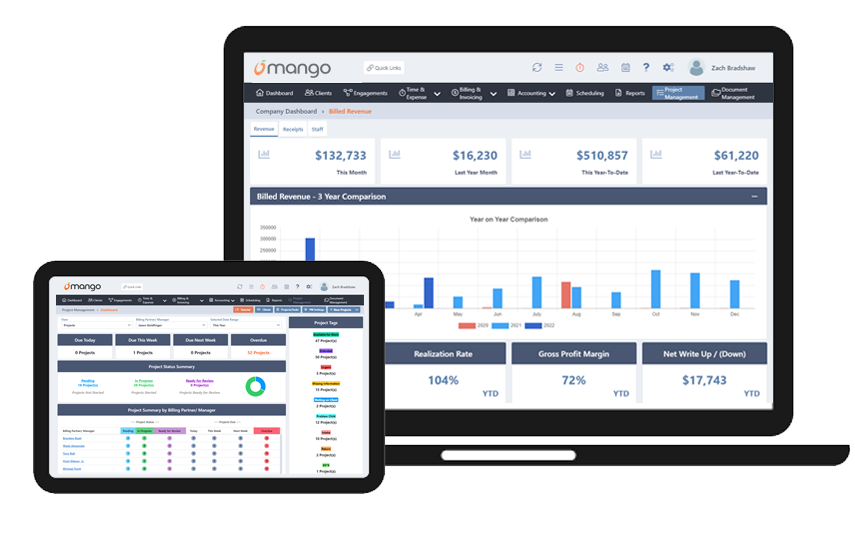
Mango gives accounting firms one control center for client work, communication, billing, payments, documents, and deadlines. When everything lives here, you spend less of the day chasing loose ends and more of it moving work forward.
Want to see how it works? Book a demo to see how Mango makes accounting work easier to track, assign, manage, and complete, so healthier habits have a better chance of sticking.
Unlock your accounting firm’s potential.
Save time, streamline workflows and get paid faster with Mango’s all-in-one Time and Billing Practice Management software.
Latest Posts

QuickBooks Time Tracking for Accounting Firms: What Breaks at 10+ Staff (and What to Do About It)
Most firms eventually outgrow basic tools, but hitting 10+ staff usually exposes the limits of general-purpose timekeeping. Learn when your firm needs specialized time tracking software for accountants to manage complex rates, detailed client matters, and reporting.

The CAS Pricing Problem: Structuring Monthly Recurring Revenue Without Scope Creep
Client Advisory Services (CAS) can look profitable on paper while scope creep drains margins. Learn how to structure CAS pricing, build tiered service models, and manage change orders to protect your accounting firm’s monthly recurring revenue.

Why Tax Season Workflows Break (Even When You Have Software): A Bottleneck Audit for CPA Firms
Tax season puts immense pressure on operations, turning small friction points into serious delivery issues. Learn how to perform a post-season bottleneck audit to evaluate document collection, capacity planning, and handoffs, and discover the practical steps required to optimize your CPA firm workflow management before the next busy season hits.

When to Stop Billing Hourly: The Accounting Firm’s Transition Playbook to Value-Based Pricing
Moving away from hourly billing requires a clear strategy. Learn how to safely implement accounting firm value-based pricing with our 6-phase playbook, designed to protect your margins, manage staff capacity, and eliminate scope creep.

How to Say No: 7 Scripts to Protect Your Time, Team, and Clients
Unchecked client demands exhaust your staff and compress delivery margins. Learn how accountants can say no through structured, repeatable communication scripts.